Rally Software - Application Redesign
UI/UX, Web Application, Research
Redesign Rally Team Board for better user experience.

Project Overview
I have partnered with Ebees Solutions to come up with solutions to understand the issues users face with the software and make the user journey better.
Roles
UX Designer, UI Designer, Researcher
Tools
Figma, Similarweb

1.1 Problem Statement
The business context is that existing users are facing difficulties navigating the software and hence, Rally is seeing low traffic, negative feedback, and are losing customers to competitors.
-
Negative reviews
-
Losing to competitors
-
Diffiult to navigate
1.2 Objectives
-
Work on the Rally components to help improve user interface, which is expected to result in an increase in platform subscriptions and a better competitive position.
-
Issues identified through user research be prioritised when it comes to improving user experience.
2.0 Research
This is where I can identify users and their needs to design and target appropriately.


2.2 Competitor Analysis
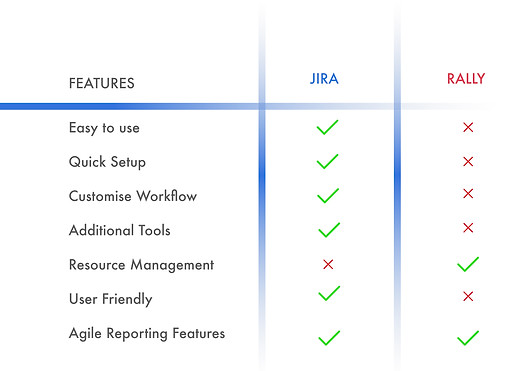
Jira is a well-known competitor to Rally. The main difference between these two programmes is that, unlike Rally, Jira is not limited to Agile project management and is adaptable to other contexts, which is one of the reasons it appears to be more user-friendly.
2.3 Secondary Research
After analysing the reviews of the software, the most common reviews were regarding the complexity of the software and the components and features it lacks.
%201_edited.jpg)
2.4 Primary Research
I partnered with Ebees Solutions and asked them what their concerns were with the software after being a previous user.
The following key issues were raised:
-
The interface does not allow you to select multiple items to drag and drop.
-
Rally is not compliant with auditing
-
The regulatory compliance is not as strict
-
Rally plug-ins are limited
3.0 Analyse
The aim of this analysis is to gain insights from the data collected from the previous research stage and confirm what are the most important aspects for the design.
3.1 User Persona
Although there is no such thing as an average user, a persona will help define the issues that are encountered as well as what consumers as a whole are asking for.
%201.jpg)
3.2 Empathy Map
The empathy map is considering a scrum master and what they might do, say think and feel. This Scrum master feels uneasy, struggles to understand and navigate around the software.

3.3 UX Analysis
This is where I analysed the current Team Board and identify any UX issues.
Takes too many clicks to create issue/defect and have to go through “Plan” and “User stories”
Can not customise workflow
Not easily visible to users

To create a project you have to go to this “access tools” icon .
Can not select more than one job to prioritise and have to do it one by one. It takes 4 clicks to change the position whereas in Jira it takes 2.
3.3 HMW & Wireframes
Our previous step enabled us to gain an understanding of the various problems, and now we can focus on which problems and possibilities we will focus on. Implementing How-might-we (HMW) statements to allow us to take the data and transform it is an effective way to do so.


4.0 Ideate
4.1 User Interface Design
Using my wireframes I designed the UI screens for an understanding of how the Team Board would look.


Key Solutions
-
Buttons and tabs explaining exactly what user can expect
-
Easy edits to Team Board
-
Clear menu for ease of use
-
Easy to create a new project
-
Ability to customise workflow
-
Clear options indicated
5.0 Reflection
Within this project, I was able to try different UX techniques to understand the problems users would face. Rally is a software that is only accessible to businesses and therefore it was difficult to get more primary research carried out. Also, it has been updated several times which meant I was constantly confronting reviews that brought several issues to my attention, but it was also difficult to understand for what version they were referring to. This was challenging because I wanted to only work on my problem statement to make the case study effective and useful, therefore to overcome this I would find myself referring back to my problem statement constantly to remind myself that the issue at hand is for current users and not potential users.
Testing a Team Board prototype would be useful in determining whether the solutions are adequate to the problem statement. At first glance, Ebees Solutions was able to overlook the design and believe it was a more user-friendly design, but actual testing of a prototype would be beneficial. To gain a better understanding of the design's effectiveness, several businesses could be contacted via LinkedIn and asked to review the prototype and answer some pre-determined questions for a written review. Following these reviews, any necessary improvements can be made, and the design and prototype can be updated and tested once more.